COP31 Special•November 2026•Clean Exit Campaign•methanebrief.org
From the heart of COP31 · Interview
“We pretend coal is already phased out”
Ingmar Rentzhog, founder of We Don’t Have Time, on why coal mine methane is a no-brainer the world keeps skipping, why the climate movement must stop chasing perfection, and why broken policy promises do more harm than no policy at all.
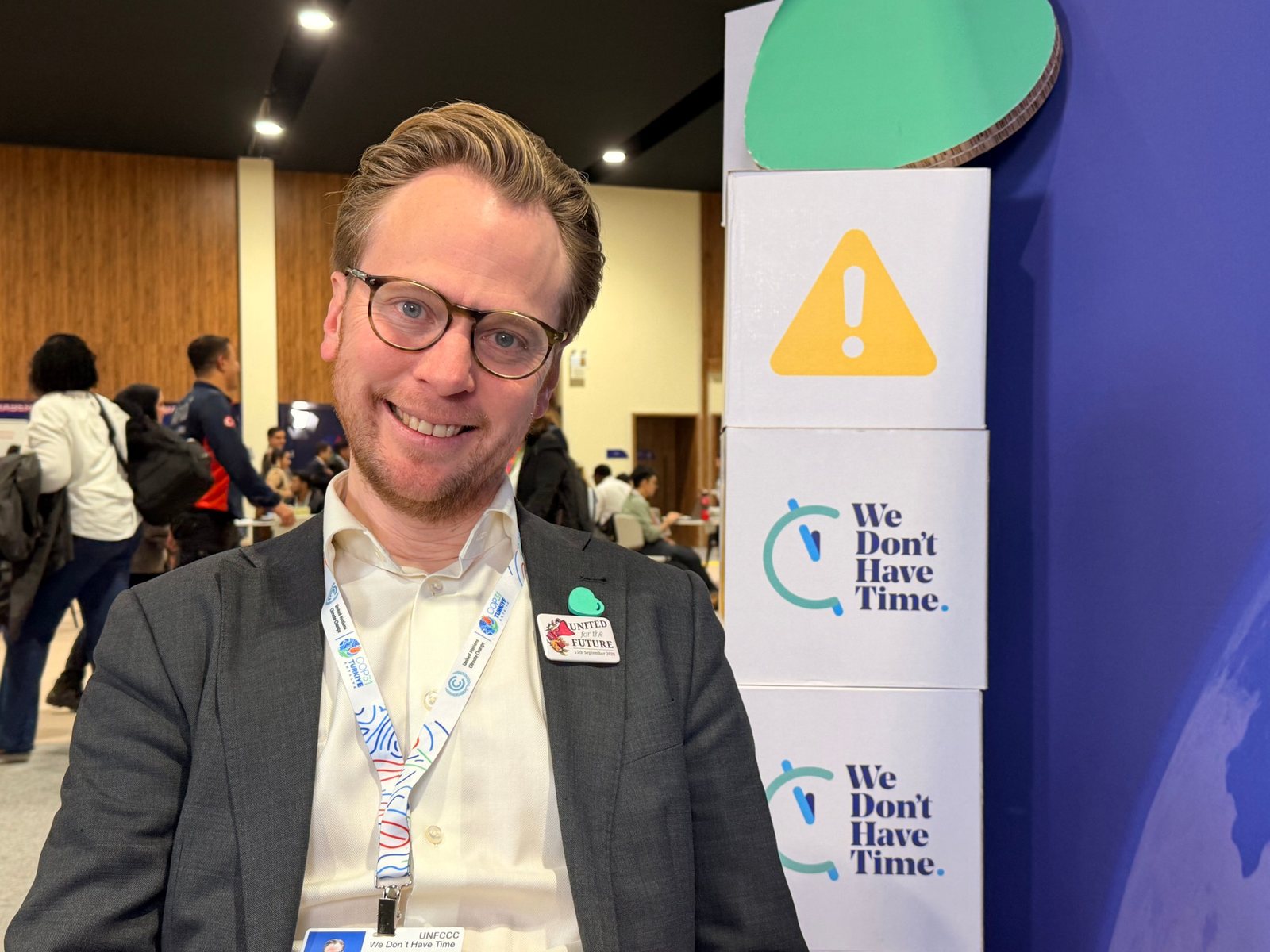
Ingmar Rentzhog left a career in finance to turn climate communication into something closer to live television. He set up We Don’t Have Time after Donald Trump’s first election win, and built it into a climate media platform that broadcasts from a studio inside the COP Blue Zone every year. Ministers, scientists, chief executives and activists pass through it between negotiating sessions.
He is also willing to take positions others avoid. Before COP29 in Baku, his team launched Buy More Time, a campaign to make methane and other short-lived super pollutants a headline climate issue. More recently he has called for climate communication to stop being “green, kind and politically correct” and to become, in his words, “loud, red and provocative”.
We reached him in Antalya, a week into COP31. Our first question borrowed his organisation’s name: in the spirit of We Don’t Have Time, why isn’t coal mine methane the first lever we pull?
“Methane, and coal methane, is low-hanging fruit, so we should absolutely focus on that. It’s a no-brainer. And it’s very frustrating that we’re not seeing more action in this space.”
Ingmar Rentzhog, founder, We Don’t Have Time
Why the movement held back
Cutting methane will not solve the climate crisis, Rentzhog says, but it lowers the temperature fast enough to buy time for everything else. That was the idea behind Buy More Time, and it met resistance from people who agreed with it.
“We were having a lot of conversations with scientists, with the NGO community, where they said, ‘Yeah, we agree with you, but we don’t want to push the framing as much.’” The fear was that a focus on methane would replace decarbonisation rather than support it.
Scientists had tried the “emergency brake” framing about a decade earlier, he says, and it backfired. Campaigners insisted the focus stay on “the real problem, the fossil fuel emissions”. Twenty years ago that made sense, in his view, because the crisis was less acute.
“Sometimes you’re too early,” he says. “The timing is right now. Now we can’t afford not to use everything we have, especially if it would give us more time.” Once the campaign launched, he says, the resistance faded, and he does not fear that debate at COP31.
Europe blinks
The biggest brake on methane action today, Rentzhog argues, is Washington. At COP29 the US government appeared on his broadcast to talk about methane, and the US and China were working together on it. That has reversed.
The US is now pressing other countries, including the European Union, to go slow on methane regulation. In his account, it has succeeded in getting the EU’s methane penalties delayed by three years. “The European Union, they spend a lot of time talking about it,” he says. “And when it comes to the day where they were going to implement it, they delayed it three years.”
He sees the opposite logic in Europe’s new gas deal with Canada, which he says is tied to Canada’s work on cutting methane. “We still use gas. We need gas in a transition,” he says. Buying only from producers who cut methane “pressures other countries to do the same, and we can raise the bar.”
Methane is also unusually easy to check. “You can have the satellites and you can actually see if they’re leaking it or not,” he says. Unlike offsets, where claimed benefits can be hard to prove, “here you can actually prove it, with independent sources”.
“We can’t afford being perfect”
We put a case to him from our own reporting. At the Aberpergwm mine in Wales, Peak Carbon has installed a unit that destroys ventilation air methane at concentrations as low as 0.2%. It is running and verified, yet it has found no buyer for its credits and could close in February. Environmental contacts tell us the problem is simple: anything coal-related is too difficult to touch.
Rentzhog recognises the pattern from aviation. He buys sustainable aviation fuel when he flies, and says he is criticised for flying rather than credited for paying more. “It’s not perfect, but it’s much better than paying for the fossil fuel.”
He understands the suspicion of the fossil industry. Many companies have lied and lobbied against change, so “the best way to do business with them is not to do business with them at all.” But that, he says, is a luxury. “Now we are in a crisis, and we can’t afford being perfect. We need alliances, even with the fossil fuel industry. But there needs to be accountability in those alliances.”
His analogy is tobacco. The industry delayed change for decades, then sold “light” cigarettes. Not smoking is better, he says, but for billions of smokers, moving towards less harm was still progress. “If we’re going to trade oil, coal and gas, and we still need to, we should put a very high bar on what we are actually buying.”
The climate movement, he says, needs to make room for nuance. “Either you’re a climate denier or a delayer, or you’re a perfect activist. We need to meet the reality.”
The coal nobody talks about
The war with Iran and the power demand of data centres are extending the life of coal mines and bringing new ones online. Countries such as Indonesia now cite energy security to back away from coal pledges. We asked whether anyone in Antalya is discussing this.
“No, it’s not really top of the agenda here, because we pretend that coal is already phased out.”
Ingmar Rentzhog
He accepts that emergency energy may be needed. Without it, people freeze, and then “they will take to the streets and they will elect a climate denier.” The honest question, he says, is how to use that coal in the best possible way, for the shortest possible time.
“Unfortunately, the climate movement is sometimes avoiding what’s complicated,” he says. “And in reality, many things are complicated.”
Steel, and the clean-coal trap
Coal will stay with us longest in steel. Ember estimates that methane from coking coal mines adds at least 27% to steelmaking’s warming effect. We asked whether that makes the case for cutting coal methane even stronger.
Rentzhog agreed on the methane, but pushed back on the framing. “Here is actually a real danger,” he said. “We can’t allow coal to be used longer just because we make it a little bit cleaner.” His rule: phase coal out, and make it as clean as possible while it is being phased out.
Fossil-free steel is not slow because of technology, he argues, but because of policy. Europe leads the world in it, with players in Sweden and Germany. Weakening the EU Emissions Trading System, now under debate, would remove the economics they need to scale.
He goes further. When governments weaken a policy after companies have invested, early movers lose money and the next wave learns to wait. “The signal is that you should not be an early mover,” he says. “That’s more damaging than not having any policy at all.”
The same applies to COP itself. Without these summits, he says, the world would be heading for four degrees or more; if every agreed policy were carried out, it would be closer to 2.8°C. “But we’re not following the policies the world is deciding on. We are cancelling them. And we are sending a signal to investors that they shouldn’t care what we decide here, because we will change it later.”
Follow the money
“What we put the money behind will happen,” Rentzhog says. Two of every three dollars invested in energy now go to clean energy, by his count, but it is not enough.
He backs divestment from oil-extracting companies: “It works.” He is far less impressed by funds that stay invested and claim to change companies from within. In most cases, he says, it is only talk: no real pressure, no voting, nothing to stop new oil investment.
His example is Nordea. The bank still finances the fossil sector, but presses those companies on methane, and he gives it credit for that. The problem is that the same companies use their profits to lobby against methane rules in Brussels. “Nordea should continue with what they do. They should just do it smarter.” Banks go quiet, he adds, because talking about it draws criticism from climate campaigners, “and that’s the wrong strategy”.
Norway may force the question. Last Friday the Norwegian state lost a Supreme Court case over oil field licensing, brought by young climate campaigners. Rentzhog says the ruling means oil companies will now have to assess their scope 3 emissions, from the burning of the oil they sell, before they drill more. “That can change the whole legal system of accountability.”
What COP31 can deliver
Rentzhog expects little from the negotiated outcome in Antalya. “Maybe we see some initiative in methane,” he says, but no breakthrough on the big problems.
What COPs do well, in his view, is calibrate the world and seed coalitions that then act outside the formal process. He cites the conference on transitioning away from fossil fuels launched by Colombia, which drew around 60 countries, with Tuvalu and Brazil set to host the next rounds. “COP meetings will not be where we solve the climate crisis,” he says. “But it will be where we realise we need to form other alliances.”
Those alliances need public pressure behind them, because when attention drifts, “the fossil fuel lobby fills the rooms of power”. That is why We Don’t Have Time used COP31 to launch United for the Future, which aims to bring 100 million people onto the streets worldwide on International Democracy Day, 15 September 2028. The 2019 climate strikes drew about 11 million.
“Most people want stronger climate action,” he says. “But they’re doing it silently at home. We need to unite.”
At 82 times the warming power of CO₂ over 20 years, methane from coal mines is not a side issue. It is the lever we can pull now, while coal is still being mined. Rentzhog’s challenge to his own movement is to pull it, without pretending the coal has already gone.
Sources
- Interview with Ingmar Rentzhog, COP31, Antalya, November 2026.
- Ember: Coal mine methane adds 27% to steel’s climate footprint
- SVT: Ingmar Rentzhog and Make Science Great Again
- Impakter: interview with Ingmar Rentzhog on the founding of We Don’t Have Time
- We Don’t Have Time at COP30
- Bloomberg: Norway loses Supreme Court ruling in oil field licensing case (13 November 2026)
Reporting, interviews and sourcing by Juneia Mallas. Drafted with AI assistance; fact-checked and edited before publication.
Previous issue: No. 22 — Open Doors at 0.2%